Pantry Staples for Breakfast
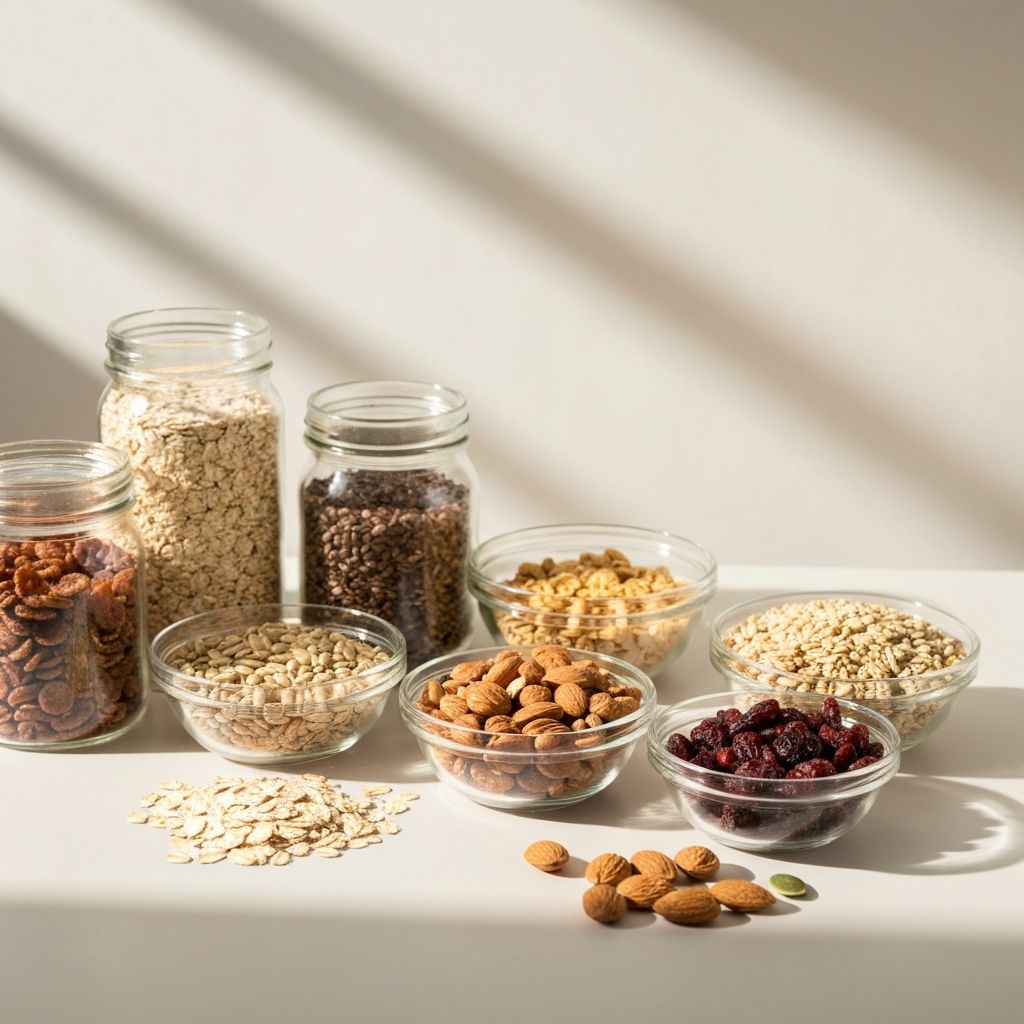
Educational overview of common breakfast ingredients and their role in morning meals
Educational overview of common breakfast ingredients and their role in morning meals
Breakfast preparation often draws from specific categories of pantry staples that nutrition educators commonly discuss when explaining morning meal composition. These items represent accessible options that many households keep available for daily use.
The following information describes general patterns observed in nutritional education and does not constitute personalized dietary advice.
Whole grain products frequently appear in discussions about breakfast nutrition due to their fiber content and complex carbohydrates. Common pantry staples in this category include:
Nutrition educators often reference nuts and seeds when explaining sources of healthy fats and protein at breakfast:
Dried fruits offer concentrated sources of natural sugars and certain nutrients. In breakfast contexts, nutritionists note:
Certain pantry items support the preparation or enhancement of breakfast foods:
Nutritional education often describes how these pantry staples combine into typical breakfast meals:
These combinations represent common patterns rather than prescriptive recommendations. Individual preferences, dietary needs, and cultural practices vary significantly.
Food safety education addresses proper storage of breakfast pantry items:
This article provides educational information about breakfast pantry staples as commonly discussed in nutritional contexts. It does not offer personalized dietary recommendations or prescriptive meal plans.
Individual nutritional needs for breakfast vary based on factors including age, activity level, health status, cultural preferences, and personal circumstances. What constitutes an appropriate breakfast differs significantly from person to person.
For guidance specific to your situation, consult qualified healthcare or nutrition professionals who can consider your individual needs and circumstances.